
Email Marketing Automation: 5 Campaigns Small Teams Need
Still sending the same blast to everyone? Email marketing automation makes follow-up timely and relevant—so more people take the next step without more busywork for your team.
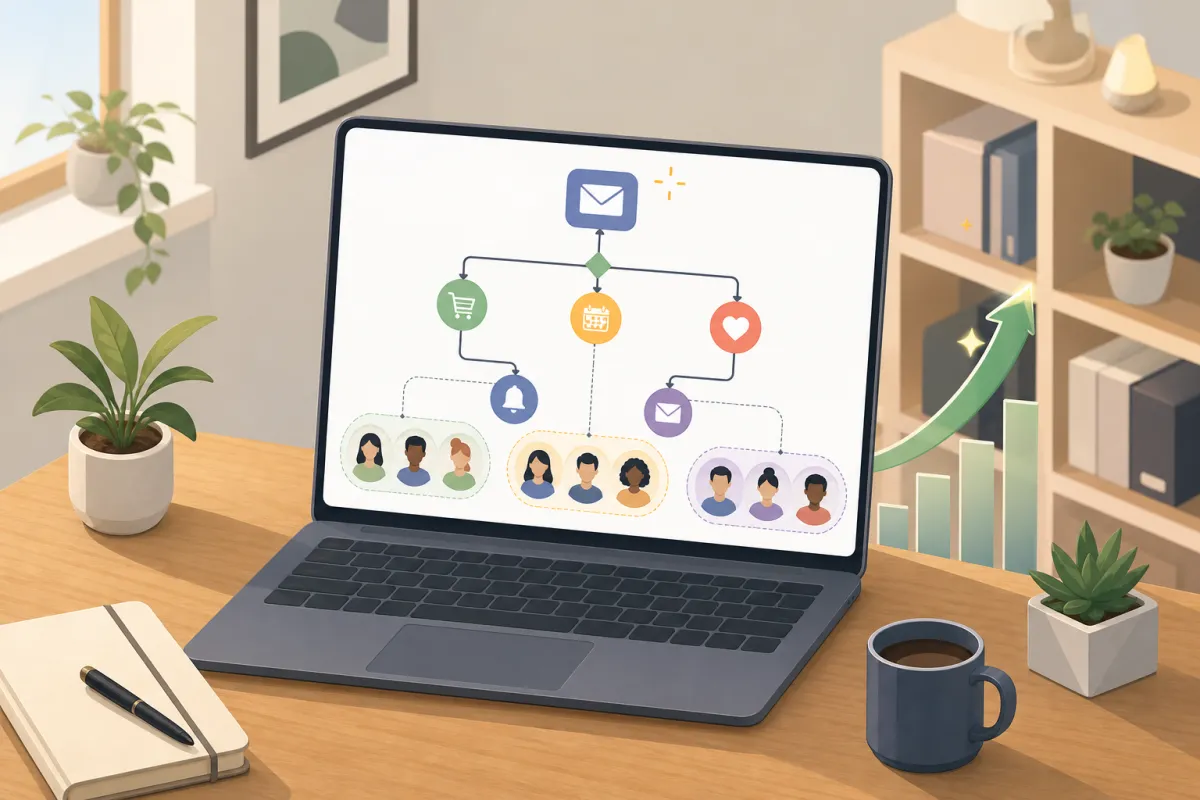
The five automated email campaigns every small business should prioritize are: (1) Welcome, (2) Lead Magnet Delivery + Email Nurture Sequence, (3) Abandoned Checkout or Inquiry Follow-Up, (4) Post-Purchase or Onboarding, and (5) Re-Engagement/Win-Back. Together, these automated email campaigns cover the full customer lifecycle and help you convert, retain, and re-activate customers at scale.
The 5 Essential Automated Email Campaigns
- 1) Welcome Series (2–4 emails): Greet new subscribers, set expectations, and offer a fast win or incentive. Goal: turn new signups into first purchases or consultations.
- 2) Lead Magnet Delivery + Email Nurture Sequence (4–6 emails): Deliver the resource immediately, then teach, build trust, and present a clear next step. Goal: move leads to a call, consultation, or checkout.
- 3) Abandoned Checkout or Inquiry Follow-Up (2–3 emails): Nudge people who started but didn’t finish—whether that’s a shopping cart, quote request, or consultation inquiry. Goal: recover interest and address objections.
- 4) Post-Purchase or Onboarding (3–5 emails): Confirm the order or booking, share setup or usage tips, and invite reviews or referrals. Goal: reduce churn and encourage repeat business.
- 5) Re-Engagement/Win-Back (2–3 emails): Reach out to inactive subscribers with valuable content or a meaningful offer. Goal: revive relationships or clean your list for better deliverability.
A Simple Build Process for Email Marketing Automation
- Map the journey. Outline key stages: aware → interested → first purchase/appointment → repeat/loyal. Identify the biggest drop-offs and launch the two highest-impact automations first (often Welcome and Abandonment/Inquiries).
- Define basic segments. Keep it simple: new subscribers, leads (resource requested), first-time customers, repeat customers, and inactive contacts. Make sure you set expectations and capture consent clearly.
- Plan triggers, timing, and message focus.
- Timing: Fast for abandonment/inquiries (hours), same-day for welcomes, 1–3 weeks for nurture, and 60–120 days for win-backs.
- One job per email: Deliver the asset, answer a common objection, teach one tip, or ask for one action—no multitasking.
- Personalization: Use name, location, and known interests where appropriate. Helpful beats hype.
- Compliance & deliverability: Include a clear unsubscribe, use a recognizable from-name, authenticate your domain, and regularly remove long-term non-engagers.
- Measure and iterate. Watch engagement and conversion for each sequence. Test one change at a time (subject line, call-to-action, timing) and give tests enough time to be meaningful.
Copy-Ready Examples You Can Adapt
E‑commerce Boutique (Accessories)
Welcome (3 emails): “Here’s 10% off your first pick” → “60‑second styling tips” → “Bestsellers customers love (free returns info).”
Abandonment (2 emails): “Still deciding? Closer look at your pick” → “Low stock alert—finish your order.”
Post‑Purchase (3 emails): “Care guide” → “Style combos to try” → “How did we do? + thanks for your review.”
Local Home Services (HVAC)
Lead Magnet + Nurture: Deliver “7‑Point Spring AC Checklist,” then four emails: filter reminder → energy‑saving tip → customer win → “Schedule a seasonal tune‑up.”
Post‑Service: “Thanks—rate your visit” → “Add us to contacts” → referral incentive.
Win‑Back: “It’s been a year—book maintenance before peak season.”
Health Clinic (Chiropractic)
Welcome: What to expect, insurance details, and how to prepare for a first visit.
Missed Inquiry Follow‑Up: “Want to finish scheduling? Here’s what your first session includes.”
Onboarding: “How to prep for your appointment” → simple exercises → review request and easy reschedule info.
Consulting/Agency
Lead Magnet + Nurture: Deliver the “CRO Audit Checklist,” then five emails: quick win → case study → objection handling → ROI framing → “Choose a time to talk.”
Post‑Project: recap outcomes → optimization roadmap → referral program invite.
How Kalingo Helps You Implement This
- Automated Email Sequences: Kalingo Email Sequences let you automate multi‑step follow‑ups and keep messages organized in a single threaded conversation—ideal for sales follow‑ups, lead nurturing, appointment reminders, and onboarding.
- Email Builder options: Create with a drag‑and‑drop design editor or an HTML code editor. If you already have designs, you can import your own HTML templates.
- Dedicated sending domain: Set up a dedicated sending domain to control what appears to be coming from your business and support inbox placement.
- Schedule and refine: Plan your send schedule, review performance, and iterate on content to improve engagement over time.
Common Mistakes to Avoid
- Building everything at once: Launch the two highest‑impact automations first, then expand.
- Asking for too much in one email: Keep each message focused on a single next step.
- Neglecting deliverability: Authenticate your domain, send consistently, and prune inactives.
Summary / Next Steps
These five campaigns—Welcome, Nurture, Abandonment/Inquiries, Post‑Purchase/Onboarding, and Re‑Engagement—do most of the work in small business email marketing automation. Build them once, keep them fresh, and let them run.
Next step: Create your first Email Sequence in Kalingo’s Email Builder. Start a trial or book a demo to see how quickly you can launch your core automated email campaigns.
Recommended next reads
- Marketing Automation for Small Businesses: What to Set Up First
- Appointment Reminder Automation: Email, SMS, and No-Show Reduction
- Automated Lead Follow-Up: 7 Workflows That Turn More Enquiries Into Customers
Ready to compare options? View Kalingo pricing plans and choose the setup that fits your next growth move.
Frequently Asked Questions
What are the best automated email campaigns for small businesses?
Welcome, Lead Magnet Delivery + Email Nurture Sequence, Abandoned Checkout or Inquiry Follow‑Up, Post‑Purchase/Onboarding, and Re‑Engagement/Win‑Back. They cover the journey from first touch to loyalty.
How many emails should be in a welcome series or email nurture sequence?
Welcome: 2–4 emails over 3–7 days works well. Focus on expectations, a quick win, social proof, and a clear next step. Nurture: 4–6 emails over 1–3 weeks, each teaching one thing and addressing one objection before presenting your offer.
When should I send abandonment or inquiry follow‑up emails?
Send the first reminder within a few hours, a second around 20–24 hours later, and an optional third at 48–72 hours. Include a clear path to finish what they started and answer common questions.