
How to Build Successful Landing Pages for Better Lead Capture
A successful landing page does not need to shout. It needs to make one promise clearly, remove the little doubts in the reader’s head, and make the next step feel obvious enough that nobody needs a committee meeting with themselves.
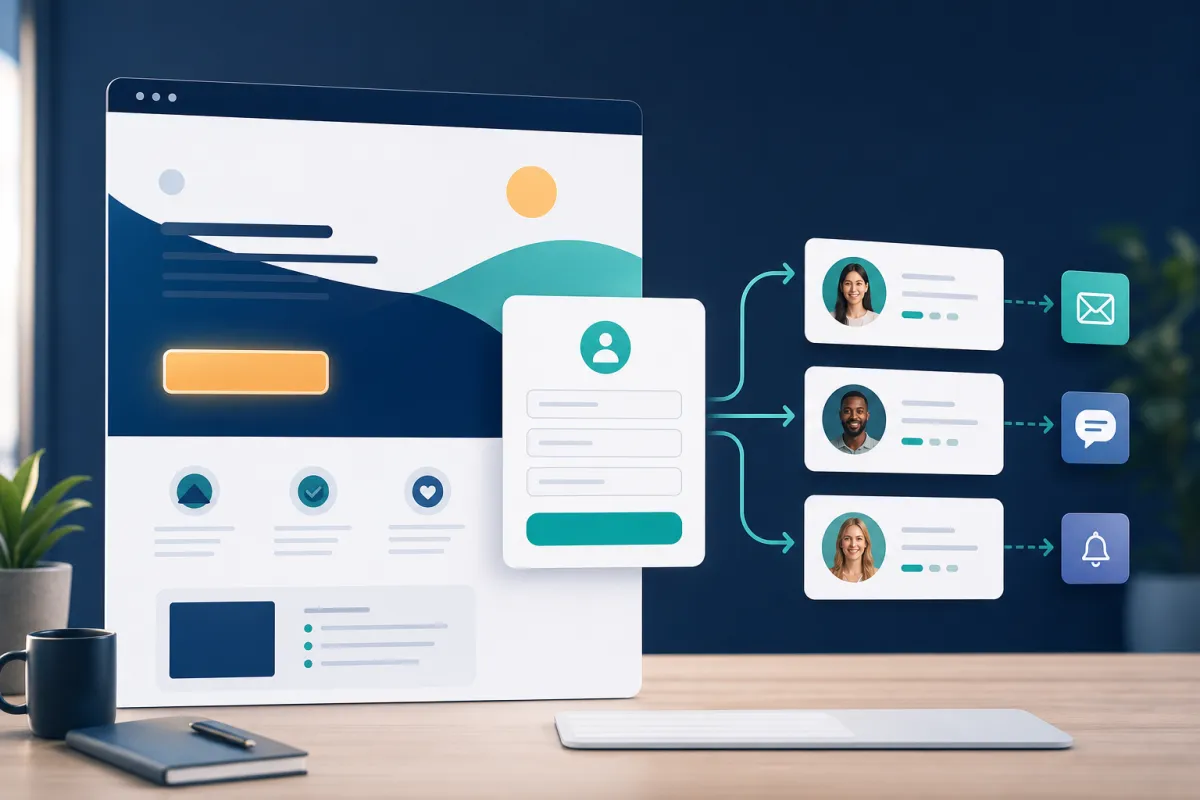
Successful landing pages turn traffic into leads by matching the visitor’s intent, focusing on one conversion goal, explaining the offer quickly, and following up while interest is still warm. The page is only half the system. The other half is what happens after the click, form fill, call, or booking request.
In this guide, you’ll get a practical landing page framework for small businesses and see how Kalingo helps connect the page, form, CRM, follow-up, and reporting into one growth process.
Why landing pages fail even when the design looks good
Many landing pages look polished but ask the visitor to do too much thinking. The headline says one thing, the ad or email promised another, the form asks for half a biography, and the call-to-action sounds like it was written by a printer manual.
Visitors do not convert because a page is pretty. They convert when the page answers three questions fast: “Am I in the right place?”, “Can this solve my problem?”, and “What happens if I click?”
The job of the page is not to explain your entire company. It is to help one specific audience take one useful next step.
The landing page framework that keeps visitors moving
- Start with one page goal: Choose the primary action before writing anything. Book a call, request a quote, download a guide, start a trial, register for a webinar, or buy a product. If the page has five equal CTAs, the visitor has a menu, not momentum.
- Match the message that brought them there: The headline should echo the promise from the ad, email, social post, search result, or referral. Message match lowers confusion and reassures the visitor they landed in the right place.
- Show the outcome before the features: Lead with the result the customer wants, then explain the mechanism. “Get more booked consultations from existing traffic” is easier to care about than “advanced multi-step conversion interface.” One sounds useful. The other sounds like homework.
- Make the form earn its questions: Ask only for information your team will use in the next step. Shorter forms can reduce friction, while longer forms may help qualify leads. The right form length depends on the value of the offer and the complexity of the sale.
- Use trust proof near decision points: Add testimonials, client logos, review snippets, before/after examples, or simple “what happens next” explanations. Trust proof works best when it supports the exact decision the visitor is making.
- Plan the follow-up before launching: A landing page without follow-up is a fishing net with a decorative hole in it. Decide who receives the lead, what message goes out first, and how quickly the team should respond.
A simple landing page structure you can reuse
Use this structure when you need a focused lead-generation page:
- Hero section: Clear headline, one-sentence value proposition, primary CTA, and supporting trust cue.
- Problem section: Name the pain in the customer’s language.
- Solution section: Explain how your offer helps and who it is best for.
- Proof section: Add testimonials, examples, or concrete outcomes without overclaiming.
- Process section: Show what happens after the visitor converts.
- FAQ section: Remove common objections before they become excuses.
- Final CTA: Repeat the main action with a clear benefit.
CTA examples that feel clear, not pushy
Effective CTAs tell people what they will receive or what happens next. Keep them specific and action-oriented.
- For a consultation: “Book your free strategy call” or “Request a 15-minute fit check.”
- For a quote request: “Get my project estimate” or “Request a service quote.”
- For a lead magnet: “Send me the checklist” or “Get the setup guide.”
- For a trial: “Start my Kalingo trial” or “Try Kalingo workflows.”
Pre-launch checklist for successful landing pages
- The headline matches the ad, email, or search intent that sends traffic to the page.
- The page has one primary CTA and the CTA appears before the visitor has to hunt for it.
- The form asks only for information needed for the next step.
- The confirmation message explains what happens after conversion.
- The lead enters the CRM or follow-up process immediately.
- The team knows who owns the next action.
- Analytics are set up to review visits and opt-ins so you can improve the page after launch.
The weekly optimization loop
After launch, review page visits, opt-ins, form completion, and follow-up outcomes once a week. Choose one improvement at a time: rewrite the headline, simplify the form, clarify the CTA, add better proof, or improve the confirmation message. Small, steady improvements are easier to trust than one dramatic redesign based on vibes.
Examples for small businesses
Local service business: A plumbing company can run a “request emergency help” page with a short form, phone CTA, service area notes, and fast follow-up. The page should reduce panic, not explain the company’s entire history since 1998.
Consultant or agency: A strategy-call page should qualify fit without making the visitor feel interrogated. Ask about business type, goal, and biggest challenge, then send a confirmation that explains the next step.
E-commerce brand: A product landing page can focus on one offer, one audience, and one buying reason. Use product benefits, usage examples, reviews, and a clear checkout or lead-capture path.
Clinic or appointment-based business: A booking page should make availability, preparation, cancellation expectations, and reminders clear. The visitor should never wonder, “Did that booking actually work?”
How Kalingo helps you implement this
Kalingo helps turn a landing page from a static page into a lead-handling system. You can use Kalingo to connect the page experience with forms, CRM records, follow-up workflows, booking, and reporting, so the lead is not left sitting around like a forgotten coffee.
- Forms and lead capture: Collect the details your team needs and send the lead into a manageable follow-up process.
- CRM and pipeline visibility: Keep new enquiries organized so your team can see who came in, where they are in the process, and what should happen next.
- Automated follow-up: Send confirmation messages, route leads, remind the team, and keep prospects warm after conversion.
- Analytics and reporting: Review page and funnel performance so you can improve based on behavior instead of gut feeling and optimistic guessing.
Common mistakes to avoid
- Too many goals: One page should have one primary conversion action. Secondary links can exist, but they should not compete with the main goal.
- Feature-heavy copy: Features matter, but benefits create relevance. Explain the outcome first.
- No follow-up plan: Capturing a lead is not the finish line. It is the starting whistle.
- Unclear CTA: “Submit” is not a strategy. Use action language that describes what the visitor gets.
Summary and next steps
Successful landing pages are built around clarity, relevance, trust, and speed. Keep the page focused, match the visitor’s intent, make the offer easy to understand, and connect the conversion to a follow-up system.
Next step: Try Kalingo to build landing page follow-up that captures leads, organizes them in your CRM, and helps your team respond before interest cools off.
Recommended next reads
- Marketing Automation for Small Businesses: What to Set Up First
- Automated Lead Follow-Up: 7 Workflows That Turn More Enquiries Into Customers
- Lead Scoring for Small Businesses: When to Call, Email, or Wait
Ready to compare options? View Kalingo pricing plans and choose the setup that fits your next growth move.
Frequently asked questions
What makes a landing page successful?
A successful landing page has one clear goal, a relevant headline, persuasive proof, a simple CTA, and a follow-up process that continues after the visitor converts.
How long should a landing page be?
It should be as long as needed to help the visitor make the decision. Simple offers often need shorter pages. Higher-value or more complex offers may need more explanation, proof, and FAQs.
Should every campaign have its own landing page?
Not always, but campaigns often perform better when the page closely matches the visitor’s intent. If different audiences have different pains or offers, separate landing pages can make the message clearer.
How does Kalingo support landing page follow-up?
Kalingo helps connect lead capture, CRM organization, automated follow-up, booking, and reporting so each new enquiry has a clear next step.