
AI Agents for Hotels and Lodging: Turn Questions Into Bookings
Guests rarely book because your pillow menu is poetic. They book when their questions are answered, the next step is clear, and the property feels trustworthy before they arrive. AI agents for hotels can help with that first moment of confidence.
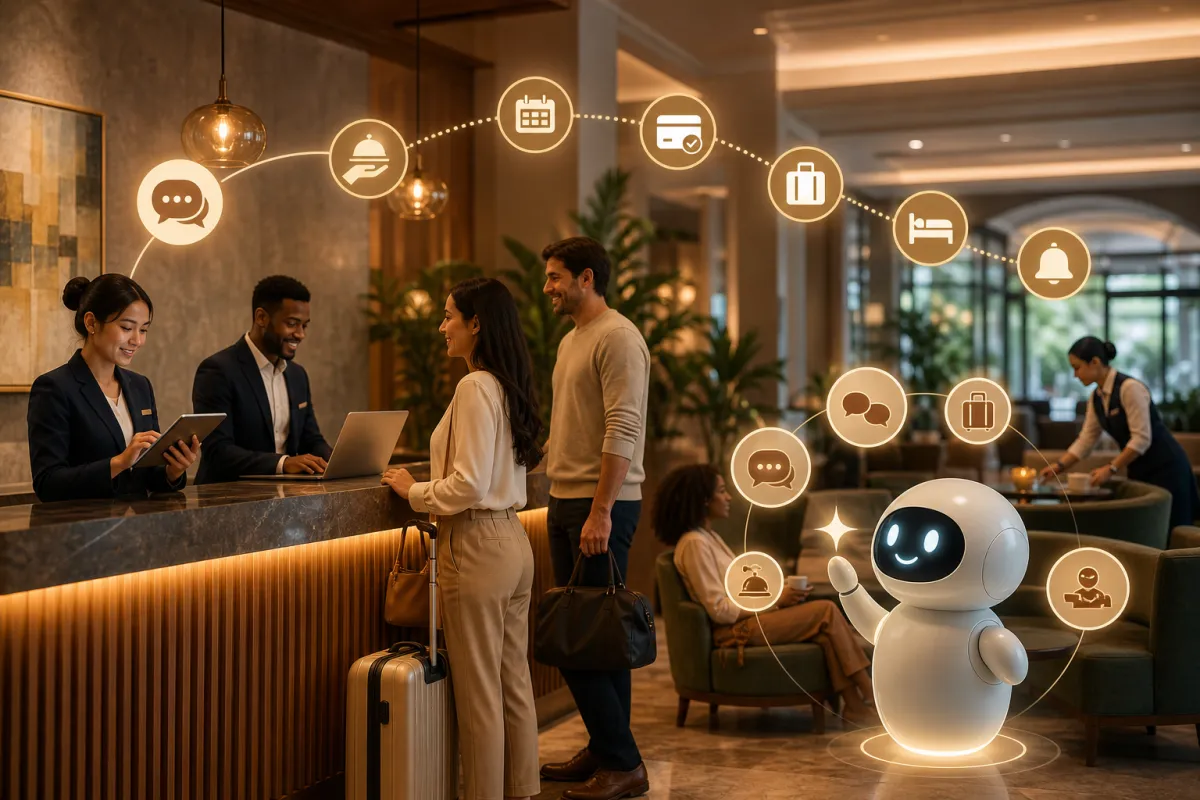
AI agents for hotels, guesthouses, B&Bs, apartments, and lodging providers can answer common guest questions, collect booking intent, guide people toward direct booking options, route special requests, and support follow-up before and after a stay. The benefit is not "replace the front desk." The benefit is "stop making the front desk answer the same parking question 47 times a week."
This article explains where hotel chatbots and AI agents are useful, what to automate carefully, and how Kalingo can help lodging providers turn guest messaging into a more organized revenue and service workflow.
Why lodging providers need faster guest messaging
Travel decisions often happen in small moments: a guest checks dates at night, compares two properties, wonders about parking, asks about pets, or wants to know whether late arrival is possible. If the answer is slow, the guest may move to another option that feels easier.
For independent hotels and lodging providers, this is especially important because staff often handle reservations, front desk questions, housekeeping coordination, reviews, and marketing at the same time. An AI agent can absorb repetitive questions so humans can focus on judgment, hospitality, and exceptions.
What a hotel AI agent should handle
A good hospitality AI agent is not a generic FAQ bot wearing a tiny imaginary name badge. It should support the guest journey while staying inside approved information and clear handoff rules.
- Pre-booking questions: Answer common questions about amenities, check-in, parking, breakfast, pet rules, location, accessibility notes, and policies based on approved property information.
- Direct booking support: Help guests understand room options, clarify the next step, and guide them to your direct booking path or team when a booking decision is ready.
- Arrival preparation: Share check-in instructions, arrival timing, parking guidance, and what the guest should expect before arrival.
- In-stay requests: Collect requests such as extra towels, maintenance issues, late checkout questions, or local recommendations, then route them to the right person.
- Post-stay follow-up: Invite feedback, send review requests, and keep guests connected for future offers or repeat stays.
AI concierge, chatbot, or AI employee?
The label matters less than the job. In hospitality, the best roles are easy to understand:
- AI concierge: Answers guest questions and guides people before or during the stay.
- Hotel chatbot: Handles common website or message-based questions quickly.
- AI reservation assistant: Collects dates, guest count, preferences, and booking intent, then routes the guest to the direct booking path or a team member.
- AI guest follow-up assistant: Sends reminders, post-stay messages, feedback requests, and re-engagement campaigns.
Benefits for hotels, B&Bs, and lodging providers
- Faster answers before booking: Guests get help when they are comparing options, not only when your team is available.
- More direct-booking confidence: Clear answers about policies, location, amenities, and arrival details can reduce uncertainty before guests click away.
- Less repetitive front desk work: Staff can spend less time repeating basics and more time solving real guest needs.
- Cleaner handoffs: When the AI collects context first, the human reply can be faster and more useful.
- Better follow-up: Guests who ask but do not book can receive polite follow-up, and past guests can be invited back with relevant messaging.
Where hospitality AI needs guardrails
Hotels and lodging providers deal with policies, payments, safety, special requests, and emotion. That means the AI must know when to stop and hand off.
- Do not invent availability: If availability is not connected or confirmed, the AI should collect intent and guide the guest to the approved booking path.
- Do not make policy exceptions: Cancellation, refunds, deposits, damage rules, and late checkout exceptions should follow approved policy or go to a person.
- Escalate urgent issues: Safety, medical concerns, lockouts, serious complaints, and maintenance emergencies need human attention.
- Keep the tone hospitable: A hotel AI agent should sound calm and helpful, not like it was assembled from spare airport announcements.
How Kalingo helps lodging providers implement AI agents
Kalingo helps lodging providers organize conversations, contacts, follow-up, and automation so guest messages do not vanish into separate inboxes or sticky notes behind the front desk.
- Conversation management: Keep guest enquiries and contact context organized so your team can see what was asked and what needs follow-up.
- Workflow automation: Trigger follow-up steps when a guest asks a question, requests help, or reaches a defined conversation goal.
- Email and SMS follow-up: Send pre-arrival information, post-stay feedback requests, re-engagement messages, or booking follow-ups in a structured way.
- AI Appointment Booking for calendar-based services: If your property offers consultations, tours, spa appointments, event visits, or other calendar-based experiences, Kalingo can help automate those booking conversations.
- CRM context: Keep guests, enquiries, and follow-up status in one place so repeat guests and warm prospects are easier to recognize.
A simple hotel AI agent workflow
- Welcome and identify intent: Is the guest asking before booking, preparing for arrival, currently staying, or following up after a stay?
- Answer from approved property information: Use clear answers for amenities, rules, arrival details, and common questions.
- Collect the next useful detail: Dates, number of guests, room preference, arrival time, request type, or contact details.
- Guide or route: Send the guest to the right booking path, workflow, or human team member.
- Follow up: If the guest does not complete the next step, send a polite reminder or helpful information.
Common mistakes to avoid
- Using generic answers: Hospitality is specific. Guests want your parking rules, your check-in process, your breakfast details, and your local advice.
- Hiding the human option: AI should reduce workload, not trap guests. Make escalation natural.
- Over-promising direct bookings: A chatbot can support direct booking intent, but the property still needs a clear offer, trustworthy booking path, and fast follow-up.
- Ignoring post-stay value: Feedback, reviews, and repeat-stay campaigns are part of the guest relationship, not an afterthought.
Summary and next steps
AI agents for hotels and lodging providers are useful when they answer common questions, reduce front-desk repetition, support direct-booking confidence, and route special requests with context. The right goal is controlled hospitality automation: fast where it should be fast, human where it should be human.
Next step: Try Kalingo or book a setup call to map your first hospitality AI workflow: pre-booking questions, guest follow-up, arrival messaging, or post-stay review requests.
Recommended next reads
- AI Customer Service Strategy: Automate Replies With Warmth
- Appointment Confirmation Psychology: Reduce No-Shows Fast
- Appointment Reminder Automation: Reduce No-Shows
Ready to compare options? View Kalingo pricing plans and choose the setup that fits your next growth move.
Frequently Asked Questions
What is an AI agent for hotels?
An AI agent for hotels is a focused assistant that can answer approved guest questions, collect booking intent, route requests, and trigger follow-up workflows while handing complex situations to staff.
Can a hotel chatbot increase direct bookings?
It can support direct bookings by answering questions quickly, reducing uncertainty, and guiding guests to the right booking path. Avoid treating it as a magic revenue button; the offer and booking experience still matter.
Should AI handle in-stay guest requests?
It can collect and route simple requests, such as towels, arrival questions, or local information. Urgent, emotional, safety-related, or policy-sensitive issues should go to a human.
How can Kalingo help lodging providers?
Kalingo can help organize guest conversations, CRM context, workflows, email/SMS follow-up, and calendar-based booking conversations for services or appointments connected to the property.